A compassionate map of the inner life
The Inner House Model™
A practical framework for understanding why you think, feel and behave as you do—and for meeting every part of yourself with greater wisdom.
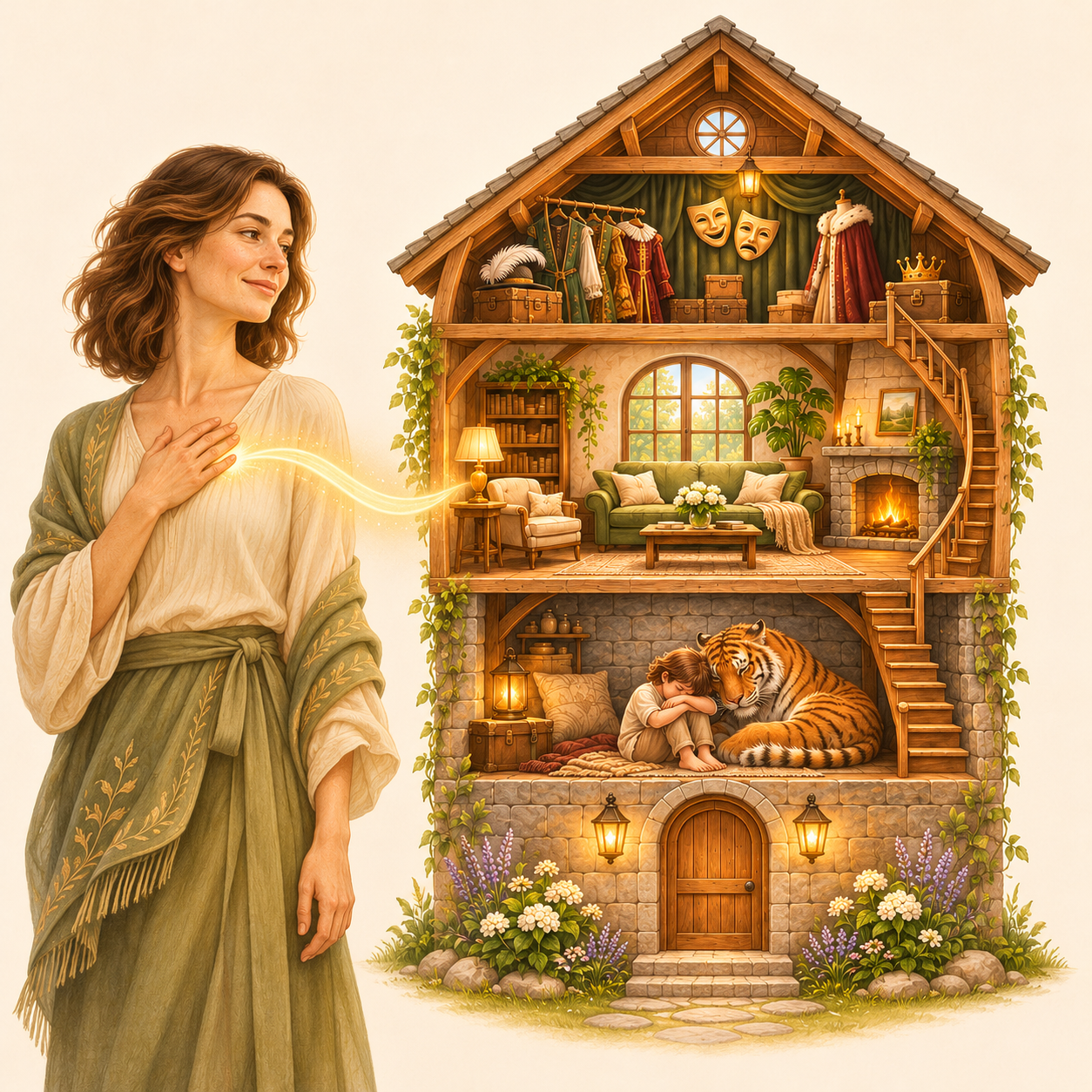
What if your life made perfect sense?
Your anxiety, confidence, relationships, strengths and suffering are not isolated pieces. They are connected. The Inner House Model™ offers a way to see those connections without judgement.
Imagine your inner world as a house. Some rooms are familiar and welcoming. Others hold old wounds, inherited stories, protective habits or gifts that have never had space to emerge. Healing does not require demolishing the house. It begins with learning its layout, listening to what each room contains, and bringing light and care to what has been hidden.
Two generous questions
“What happened to you?”
“Who are you becoming?”
These questions open space for integration, choice and a more authentic way of being.
Explore the Inner House
Select an illustration to see it at full size and read the labels.
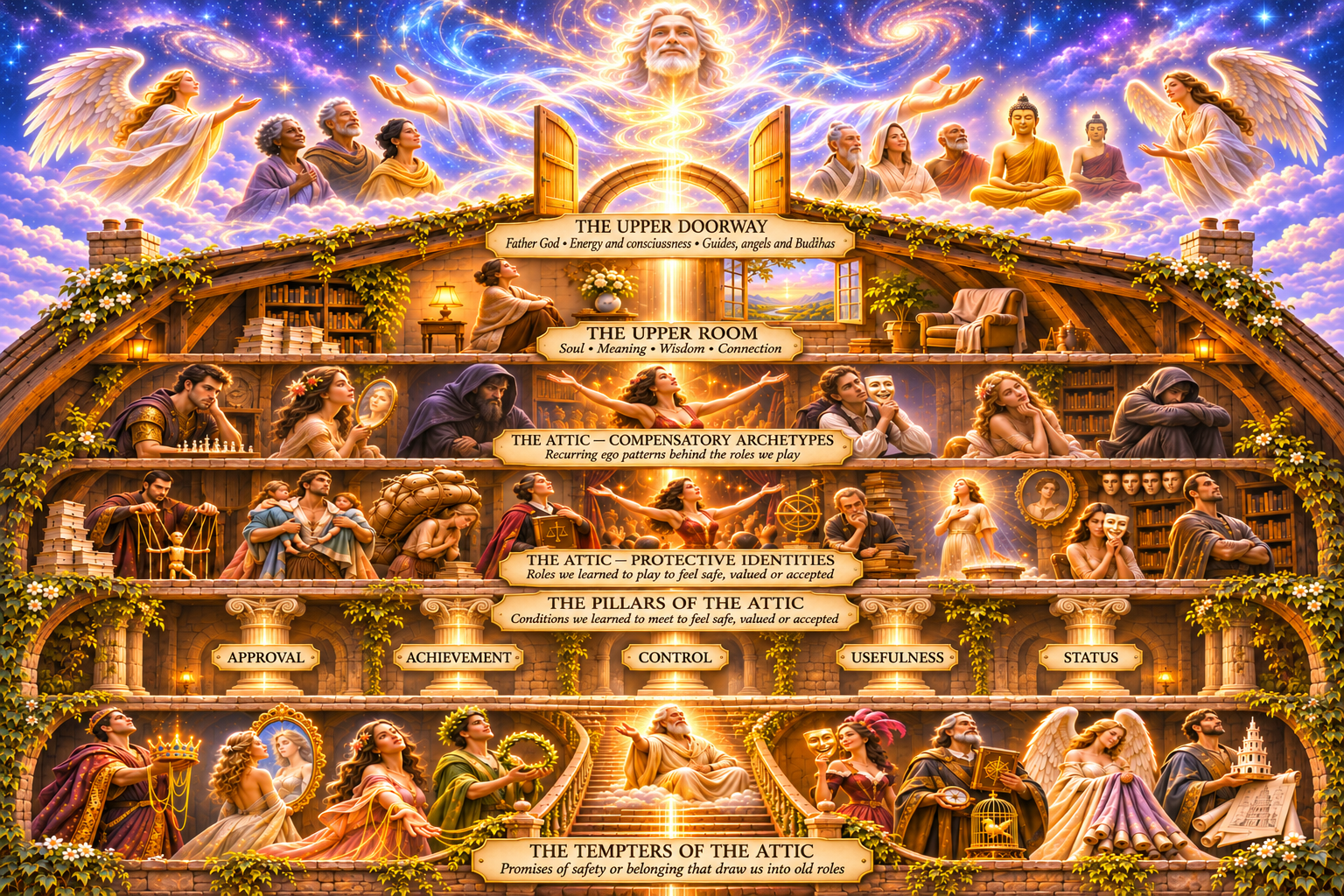
The Attic and the Upper Room
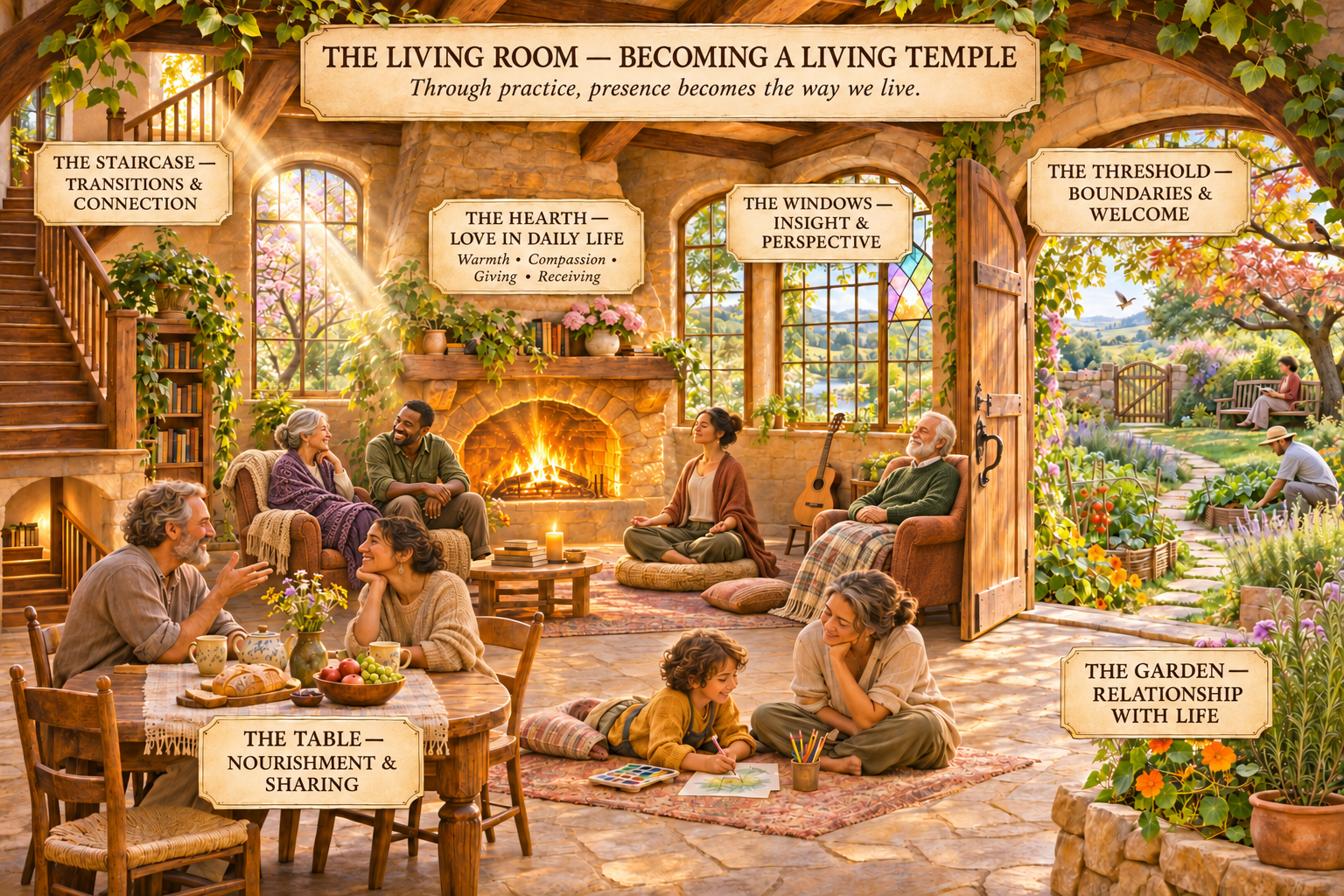
The Living Room
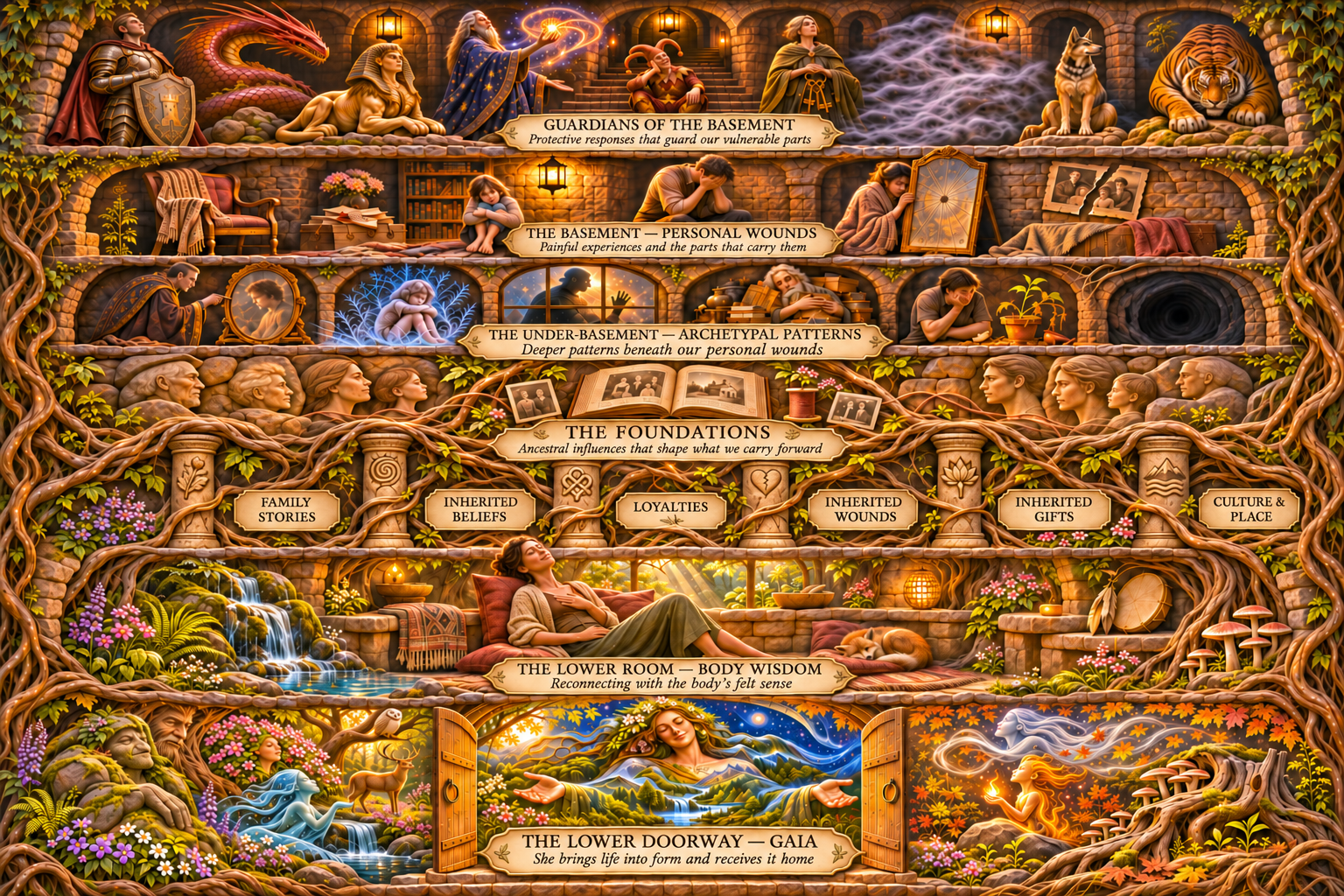
The Basement and the Lower Room
Four movements of the journey
Compassion
A humane, non-judgemental approach that honours the whole person.
Understanding
Making sense of the patterns, wounds and strengths that shape your life.
Transformation
Practical inner work that supports healing, growth and lasting change.
Connection
Reconnecting with yourself, with others and with a deeper sense of meaning.
Not a diagnosis—a way of seeing
The model brings psychology, mindfulness, spirituality and lived experience into one accessible framework.
Where the model can help
- Understanding recurring emotional and relationship patterns
- Meeting anxiety, grief and life transitions with more steadiness
- Recognising protective strategies without shaming them
- Recovering forgotten strengths, values and purpose
- Integrating psychological and spiritual development